
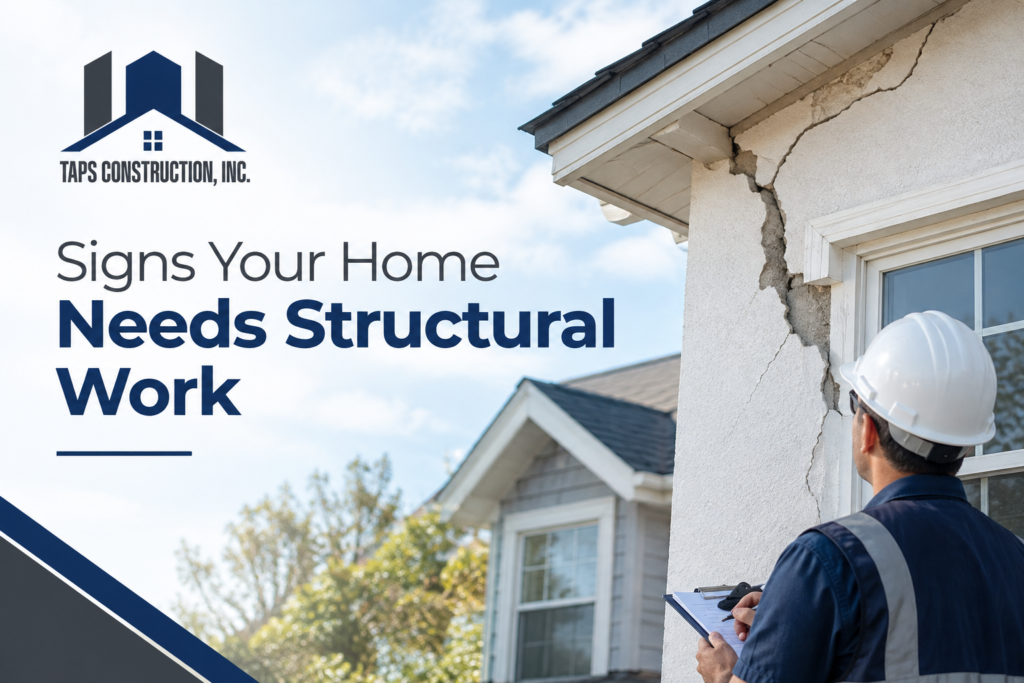
Your home carries a lot of weight every day. The foundation, framing, beams, and walls all work together to keep it safe. When one part weakens, the problem rarely stays small. In Los Angeles, structural issues often stay hidden until repairs become costly. The good news is that your home usually gives warning signs first. Spotting them early can save you money and protect your family.
This guide covers the most common signs, what causes them, and what to do next.
Why Structural Problems Are Easy to Miss
Most structural damage develops slowly. You may live with a small crack for years without a second thought.
Several factors put Los Angeles homes at risk:
- Age and normal wear on framing and foundations
- Water intrusion from leaks or poor drainage
- Earthquakes and ground movement
- Walls removed without proper support
- Earlier work done without permits or engineering
Knowing these causes helps you read the warning signs correctly.
10 Signs Your Home Needs Structural Work
1. Cracks in the Foundation
Your foundation supports everything above it. Cracks here deserve quick attention.
Watch for:
- Cracks wider than a quarter inch
- Cracks that keep growing
- Horizontal cracks in basement or stem walls
Hairline cracks are often cosmetic. Wide or spreading cracks usually point to movement or settling.
2. Cracks in Walls and Ceilings
Cracks above doors and windows are a common warning sign. So are diagonal cracks and stair step cracks in masonry. Pay attention to cracks that return after you patch them. That often means the structure is still moving.
3. Doors and Windows That Stick
A door that suddenly drags or refuses to latch is not always a humidity issue. When framing shifts, door and window openings fall out of the square. If several openings stick at once, have the home checked.
4. Sloping or Uneven Floors
Walk across your floors slowly. Do you notice a slope, bounce, or soft spot? Uneven floors can signal damaged joists, failing beams, or a sinking foundation. Place a marble on the floor. If it rolls on its own, take note.
5. Sagging Ceilings or Rooflines
The ceiling should be flat. A dip or bulge often means weight is no longer carried properly. Look at your roofline from the street too. A visible sag suggests framing or support problems.
6. Gaps Between Walls, Floors, and Ceilings
Do you see a gap where a wall meets the floor or ceiling? Does trim pull away from the wall? These gaps show that parts of the house are shifting apart. Do not ignore them, even if they look minor.
7. Bowing or Leaning Walls
Walls should stand straight. Bowing inward or leaning outward is a serious red flag. Pressure from soil, water, or failed framing can cause this. It can worsen quickly, so act early.
8. Water Damage, Moisture, and Rot
Water is one of the biggest threats to wood framing. Stains, musty smells, soft wood, and peeling paint all deserve a closer look. Over time, moisture weakens beams, joists, and subfloors. Repairs get more expensive the longer the damage continues.
9. An Older Home Without Seismic Retrofitting
Homes built before 1980 often lack proper foundation anchoring and cripple wall bracing. These features matter during an earthquake. Even with no visible damage, an older home may need protection. Seismic retrofitting anchors the framing to the foundation and reduces earthquake damage.
10. Past DIY or Unpermitted Changes
Previous owners may have removed walls or added rooms without approval. These changes can leave a home underbuilt. If you recently bought a home, or plan a remodel, have the structure reviewed first.
Minor Cracks or Serious Problems?
Not every crack means trouble. Use these quick checks:
- Likely minor: Thin, stable cracks that do not change over time
- Likely serious: Wide, growing, or diagonal cracks
- Likely serious: Cracks paired with sticking doors or sloping floors
- Urgent: Bowing walls, sagging ceilings, or sudden new damage
When in doubt, get a professional opinion. A short site visit can bring clear answers.
What Structural Repair Work Includes
Structural repair depends on what is causing the damage. TAPS Construction, Inc. offers structural and framing work that covers:
- Foundation crack repair
- Beam and joist replacement
- Subfloor repairs
- Load bearing wall removal and modification
- Seismic bolting, bracing, and soft story retrofitting
- Corrections to unpermitted structural conditions
For load bearing walls, licensed structural engineers are coordinated, temporary shoring is installed, and proper beams and posts are set under a city permit.
Typical Structural Work Costs in Los Angeles
Costs vary with scope, engineering needs, permit fees, and site conditions. These typical ranges give you a starting point:
| Project Type | Typical Cost Range |
| Structural Repairs | $4,000 to $25,000+ |
| Seismic Retrofitting | $3,500 to $10,000 |
| Load Bearing Wall Removal | $5,000 to $15,000+ |
| Structural Framing for an Addition | $20,000 to $60,000+ |
A detailed written estimate removes the guesswork before work begins.
What to Do If You Notice These Signs
Follow these steps:
- Document the damage. Take dated photos and measure any cracks.
- Monitor changes. Check if cracks or gaps grow over a few weeks.
- Stop risky projects. Do not remove or alter walls without a plan.
- Call a licensed contractor. Structural work needs the right license and permits.
- Request a written estimate. Review the scope, timeline, and costs.
Acting early almost always costs less than waiting.
Why Homeowners Trust TAPS Construction, Inc.
Structural work is not the place to take chances. Here is what you can count on when you hire us:
- Licensed: CSLB License #1134278
- Protected: Fully insured and bonded
- Owner operated: You talk directly to the owner
- Transparent: Detailed written estimates with no hidden costs
- Permits handled: We manage plan submissions, city coordination, and inspections
- Free estimates: No obligation
Our clients notice the difference. One homeowner shared that we “handled permits and inspections smoothly.” Another said the project “stayed on schedule and passed inspection without issues.”
Frequently Asked Questions
Do I need a licensed contractor for structural work in Los Angeles?
Yes. Structural or framing work over $500 in California requires a CSLB licensed contractor. TAPS Construction, Inc. holds active License #1134278 and is fully insured.
Does removing a load bearing wall require a permit?
Yes. It requires a structural engineering plan and a city permit through LADBS. We manage the full process for you.
What is seismic retrofitting, and does my home need it?
It anchors your home’s framing to its foundation to reduce earthquake damage. Homes built before 1980 without prior retrofitting face the highest risk.
How do I know if a crack is serious?
Wide, growing, or diagonal cracks deserve attention. So do cracks that appear with sticking doors or uneven floors. A professional site visit can confirm the cause.
Do you handle both residential and commercial structural projects?
Yes. We serve homeowners and commercial property owners across Los Angeles and Orange County.
Protect Your Home Before Small Problems Grow
Structural problems do not fix themselves. They tend to grow slowly, then become urgent.
If you recognize any of the signs above, schedule a visit. TAPS Construction, Inc. will assess your home and explain your options clearly.
Request your free estimate today, or call us at (310) 480 4840. You can also visit us at 4016 Marine Ave, Lawndale, CA 90260, Monday to Saturday, 9:00 AM to 6:00 PM.